How to Store Winter Clothes So They Come Out Ready Next Season
Clean everything first, fold knitwear, choose breathable storage and keep the boxes somewhere cool, dark and dry. A step-by-step routine for coats, sweaters, boots and accessories.
· 5 min
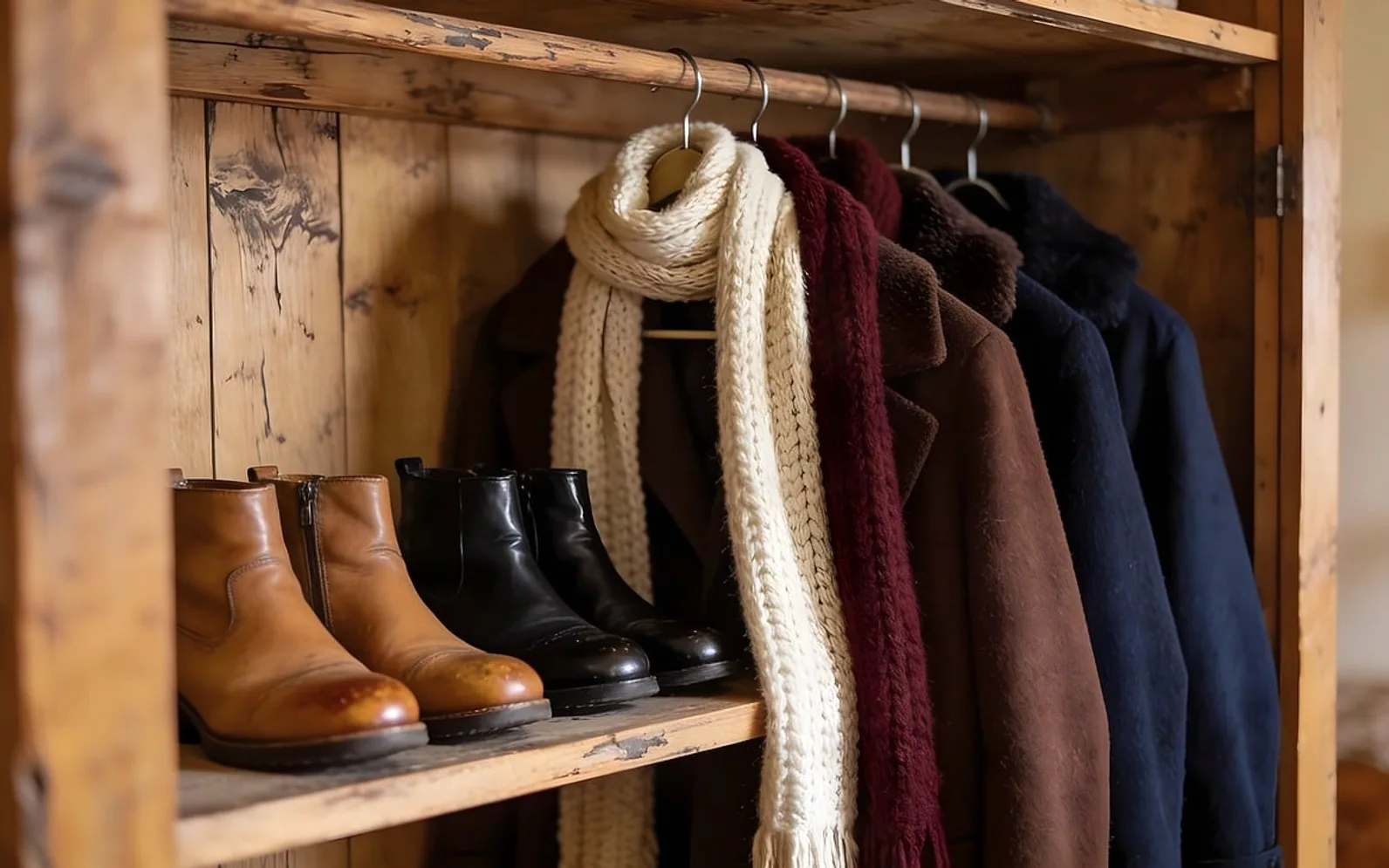
To store winter clothes well, wash or clean every item first, let it dry completely, fold knitwear rather than hanging it, and pack everything into clean, breathable containers kept somewhere cool, dark and dry. Add a moth deterrent for wool and check the boxes once or twice during the off-season. Those few habits prevent most of the problems people find when they unpack in autumn: stale smells, yellowed collars, stretched shoulders and small holes in a favourite jumper.
The details depend on the fabric and on how much space you have, so here is the full routine.
Step by step: packing away a season
- Sort before you store. Pull out everything that did not get worn this winter and decide whether it stays. Storing less means more air around what remains.
- Clean everything, even items that look fine. Body oils, food traces and deodorant marks are often invisible at first and darken over months. They also attract moths and carpet beetles. Follow the care label for each piece; if the symbols are a mystery, our explainer on reading laundry symbols on a care label decodes them.
- Dry completely. Even slight dampness in a thick knit or a padded coat can turn into mildew in a closed box. Leave items out an extra day if in doubt.
- Repair and refresh. Sew on loose buttons, close small seams and remove bobbles now, so everything is ready to wear when the cold returns. The quickest ways to shave and prevent fuzz are in our guide to removing pilling from clothes.
- Empty all pockets. Tissues, sweets and receipts are easy to miss and become a problem by next winter.
- Pack by type, using the storage notes below.
- Label each container on at least two sides with its contents, so you can find gloves in October without opening every box.
How to store sweaters and other knitwear
Fold sweaters, never hang them for months. The weight of the garment pulls on the shoulders and leaves bumps or stretched necklines that rarely recover. Lay the sweater face down, fold the sleeves across the back, then fold the body in half or thirds. Place heavier knits at the bottom of a pile and lighter ones on top.
Wool, cashmere and other animal fibres are the main target for clothes moths, whose larvae feed on the protein in the fibres. Clean knits are far less attractive to them. Cedar blocks, cedar rings or lavender sachets are popular deterrents; they are not a guarantee, and cedar loses its scent over time, so lightly sanding the blocks each year helps.
Coats, jackets and down
- Wool coats keep their shape best on a broad, sturdy hanger inside a breathable cotton garment bag. Fasten the top button so the collar sits correctly.
- Down and synthetic puffers should not stay squashed for months. Hang them, or store them loosely in a large bag, so the filling keeps its loft.
- Leather and suede need air. Avoid plastic covers, which can trap moisture, and keep them away from radiators and sunny windows.
- Waterproof shells can be folded loosely once clean and dry.
Choosing containers
| Storage option | Works well for | Watch out for |
|---|---|---|
| Cotton or canvas storage bags | Knitwear, wool, natural fibres | Offer little protection against crushing |
| Lidded plastic boxes | Mixed items in lofts, garages or under beds | Only for completely dry clothes; add a breathable inner layer such as an old cotton sheet |
| Vacuum bags | Synthetic fleeces, bedding, bulky items when space is tight | Can crush down and wool fibres if left compressed for long periods |
| Garment bags on hangers | Coats, suits, structured jackets | Choose breathable fabric over sealed plastic |
| Shoe boxes or open racks | Boots and winter shoes | Clean and dry the soles first; stuff boots with paper to hold their shape |
Dry-cleaning bags are designed for the trip home, not for months of storage. Remove them and swap in something that breathes.
Where to keep the boxes
The ideal spot is cool, dark, dry and steady in temperature: the top of a wardrobe, the space under a bed or a spare-room cupboard. Lofts can work if they stay dry, though many swing between hot and cold. Basements and garages are riskier, because damp and pests travel easily there; if they are the only option, raise the boxes off the floor on a shelf or pallet.
Any storage space that has had a leak or flooding should be fully dried out before clothes go back in, since textiles soak up lingering moisture. The stages of getting a home dry and safe again after water gets in are covered in our piece on community-focused water restoration after a storm.
If a house move falls between seasons, the off-season boxes are often the easiest to pack first, and they can travel with other belongings in temporary storage; our look at how container rentals can simplify a move explains how that option works.
Accessories and small items
Hats, scarves and gloves are easy to lose track of. Wash them, pair the gloves, and keep everything together in one labelled box or a set of drawer dividers. Woollen hats keep their shape better when stuffed lightly with tissue paper. Thermal base layers can be rolled and stored alongside them.
Checking in during the off-season
Open the boxes once or twice before the cold comes back. A quick look lets you catch a musty smell, a stray moth or a damp corner while it is still a small problem. Give knitwear a shake, refresh the cedar or lavender, and let everything air for an hour if it smells shut in.
Is it better to roll or fold winter clothes?
Fold heavy knits, which can stretch when rolled tightly. Rolling suits T-shirts, thermals and thin layers, and saves space in drawers.
Should winter clothes go in plastic bags?
Short-term, sealed plastic is fine for clean, dry synthetics. For months of storage, especially for wool, leather and down, breathable fabric is the safer choice because it lets any moisture escape.
Latest by topic
Editor’s picks
 FashionLaundry Symbols Explained: How to Read a Clothing Care Label5 min
 EntertainmentIPTV in Belgium: The New Standard for Home Entertainment2 min
 Guides & TipsEnhancing Query Performance in Vector Databases for RAG Systems2 min
 Guides & TipsChoosing Plumbing Services With Confidence: Signals of Quality, Value, and Long-Term Care2 min