Quartz vs Automatic Watches: How the Two Movements Compare
One runs on a battery and a vibrating crystal, the other on a spring wound by your wrist. How quartz and automatic watches differ, and which suits you.
· 4 min
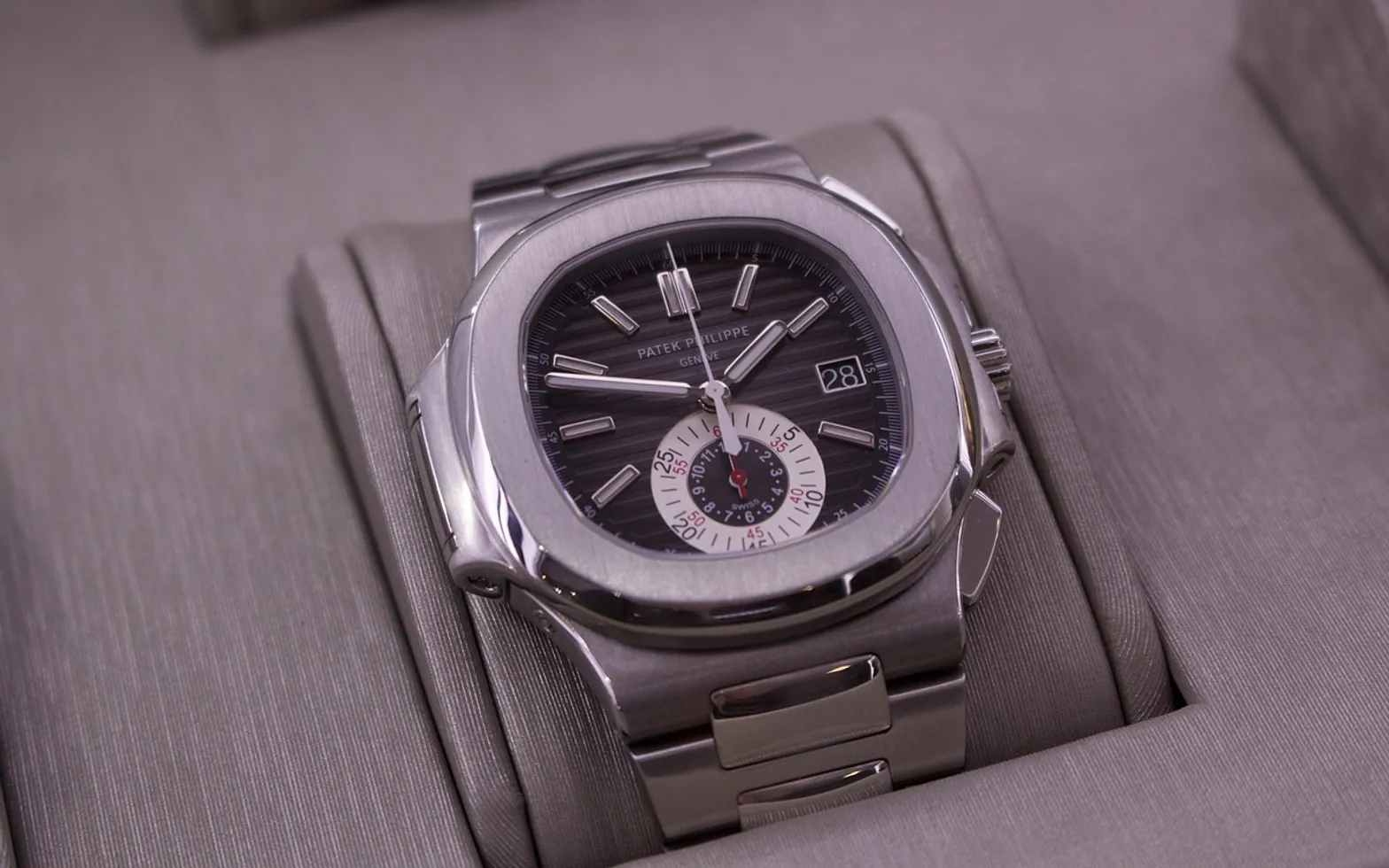
A quartz watch runs on a battery and a vibrating crystal, keeps very accurate time and needs little more than a fresh battery every few years. An automatic watch is fully mechanical: it winds itself from the movement of your wrist, drifts by a few seconds a day and needs periodic servicing. The choice comes down to how much you value convenience against mechanical craft.
How a quartz watch works
Inside a quartz watch, a small battery sends current through a tiny piece of quartz cut into the shape of a tuning fork. Quartz vibrates at a very stable frequency when electricity passes through it. A circuit counts those vibrations and sends a pulse to a small motor once a second, which is why most quartz seconds hands move in distinct ticks.
Quartz arrived on the wrist at the end of the 1960s, and within a decade it had shaken up the whole industry by making accurate watches affordable for almost anyone.
How an automatic watch works
An automatic uses the same principle as any mechanical watch: a coiled mainspring stores energy and releases it through a train of gears. A balance wheel swinging back and forth controls that release, beating several times a second, which gives the seconds hand its smoother sweep. The "automatic" part is a weighted rotor that spins as your wrist moves and winds the mainspring. Our look at automatic watches through the decades traces how that idea developed.
If an automatic sits unworn long enough, its stored power runs out and it stops. Winding the crown a few turns or giving the watch a gentle swing starts it again.
Side-by-side comparison
| Feature | Quartz | Automatic |
|---|---|---|
| Power source | Battery | Mainspring wound by wrist movement |
| Accuracy | Very high; drift measured in seconds per month | Good; drift measured in seconds per day |
| Seconds hand | One tick per second | Smooth sweep |
| Upkeep | Battery change every few years | Full service every several years |
| Sensitivity | Copes well with knocks and magnets | Can be affected by shocks and strong magnets |
| Price range | Starts very low | Generally higher for similar build quality |
| Character | Practical, grab-and-go | Mechanical, often with a see-through caseback |
Accuracy in practice
Quartz wins clearly. An ordinary quartz movement is rated in seconds per month, while a mechanical one is rated in seconds per day. For most owners, an automatic that gains or loses a little each day simply means resetting it every week or two. Certified chronometers are tested to tighter limits, but even they cannot match a basic quartz movement for precision.
Automatics can drift more if they meet strong magnets, such as those in phone cases, laptop lids and handbag clasps, or when they are running low on power. Keeping one well wound tends to keep it steadier.
Maintenance and long-term cost
Quartz
Battery changes are cheap and quick. It is worth having them done by someone who can check the case seals if the watch is water resistant. Don't leave a dead battery inside for months, because old batteries can leak and damage the movement.
Automatic
A mechanical movement has dozens of moving parts, lubricated with oils that age over time. Makers recommend a full service at intervals of several years; the exact figure varies by brand and movement. A service costs far more than a battery, but a well-maintained mechanical watch can keep running for generations.
Other movements worth knowing
- Hand-wound mechanical: like an automatic but without a rotor, so you wind the crown, usually daily.
- Solar quartz: a quartz watch that recharges from light, so battery changes are rare.
- Kinetic or "automatic quartz": a rotor generates electricity to charge a cell that then runs a quartz movement.
- Hybrid designs: a mainspring paired with electronic regulation for a smooth and very accurate sweep.
Which one suits you?
Choose quartz if you want:
- A watch that shows the right time even after weeks in a drawer.
- Lower purchase and running costs.
- Something robust for sport, travel or rotating with other watches.
Choose automatic if you want:
- Mechanical craftsmanship you can watch working through the caseback.
- A watch that never needs a battery.
- A piece designed to be serviced and eventually handed down.
Plenty of collectors end up owning both: a quartz for practicality and an automatic for days when they want to wear something with a story behind it.
Choosing one as a gift
Watches are a traditional way to mark milestones such as graduations, retirements and engagements, and in some cultures a watch is the customary engagement gift for one partner. If that is the occasion, it can sit alongside other personal touches such as personalised engagement ceremony invitations. An automatic tends to feel more ceremonial; a quartz is the safer pick for someone who will wear it only now and then.
Quick questions
Can you tell them apart at a glance?
Watch the seconds hand. A one-second tick usually means quartz; a smooth sweep usually means mechanical. The dial or caseback often says "automatic" as well.
Does an automatic have to be worn every day?
No, but it will stop once its reserve runs down. A quick hand wind before wearing, or a watch winder, solves that.
Is a quartz watch somehow lesser?
Not at all. It is a different technology, and in pure timekeeping terms it is the more precise of the two.
Latest by topic
Editor’s picks
 FashionLaundry Symbols Explained: How to Read a Clothing Care Label5 min
 EntertainmentIPTV in Belgium: The New Standard for Home Entertainment2 min
 Guides & TipsEnhancing Query Performance in Vector Databases for RAG Systems2 min
 Guides & TipsChoosing Plumbing Services With Confidence: Signals of Quality, Value, and Long-Term Care2 min